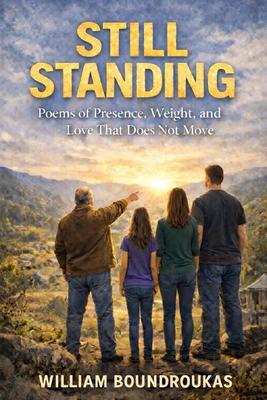
I am a husband, a father, and an attorney. I write not from ambition, but from responsibility.
I practice law in Glenview, Illinois, and I built my practice from nothing—no inherited clients, no institutional backing, no shortcuts. My work has lived in the world of consequences: courtrooms, negotiations, and high-stakes decisions made under pressure, when there are no perfect options, and someone still has to choose.
I have tried cases. I have carried obligations that others only notice when they become emergencies. Over time, I learned something simple and brutal: competent people rarely break down due to a lack of intelligence or effort. They break from confusion—about what they are responsible for, what they are not, and how long they’re expected to carry it.
Endurance for me is not only professional. It is physical. In recent years, I spent time in a burn unit with third-degree burns, enduring repeated trials and relearning how to walk while in real, persistent pain. Life did not pause. Calls still had to be made. Decisions still had to be handled. That experience burned away any remaining tolerance for slogans and left behind clarity: what matters, what doesn’t, and what it actually takes to keep functioning when life doesn’t get fixed.
I am the son of Greek immigrants, raised in Chicago in a crowded home shaped by siblings, obligation, and work. My mother could not read or write, yet she carried a moral clarity that shaped me more than formal education ever could. From her I learned that dignity does not come from polish, perseverance matters more than comfort, and prayer and work—together—can sustain a life.
I share my life with my wife, Sophie. Her strength, patience, and quiet constancy have carried our family through years of responsibility, uncertainty, and strain. Much of what I write is informed by her presence, even when she is not named. She taught me that love is not loud, not performative, and not transactional. It is steady. It stays.
I am the father of two children who reshaped my understanding of meaning and love. My son taught me forward motion—the discipline of continuing even when the path is unclear. My daughter, Katerina, has autism and has never spoken a word. She is holy, luminous, and deeply loved. Through her silence, my inner world was reordered. She taught me that silence is not emptiness, but presence; not absence, but depth. Much of my work—its attention to the unseen, the unspoken, and the overlooked—flows directly from that sacred silence.
Although I am deeply shaped by faith, I do not write as a theologian or a preacher removed from ordinary life. I write as a working lawyer who has spent decades carrying cases, bills, responsibilities, and consequences. I have spent more nights in courtrooms than in monasteries. And yet, in the margins of that practical life—in exhaustion, in vigilance, in prayer whispered rather than proclaimed—I have encountered truths that logic alone could never reach. My books live in that tension: grounded and realistic, spiritually alert without becoming doctrinal or instructive.
Across poetry, narrative nonfiction, and literary fiction, I return to the same questions again and again: What does love look like when it cannot fix anything? What does faith look like when it is quiet and uncelebrated? What does it mean to stay?
Some of my books are symbolic and mythic, others direct and narrative, others spare and restrained. Taken together, they form a single moral landscape—one that honors endurance over spectacle, presence over performance, and action over explanation. I do not write to persuade, instruct, or impress. I write to witness—to record what love, endurance, and faith look like when they are lived quietly, over time, and often without recognition.
If there is a single thread running through all of my work, it is this:
Love is not proven by what it promises, but by what it does—especially when there is no applause, no certainty, and no visible reward.